You need demand for specific services
You want enquiries for defined jobs in areas you can reliably cover. Clear priorities help focus the plan instead of spreading attention across every service and every nearby city.

Google Ads Management
Google Ads planned around your actual jobs, service areas and budget. We connect relevant campaigns with useful landing pages and reporting that explains enquiry quality.
Built around your services, service areas, and the enquiries you want.
Your Houston-based, in-house ISR team researches the business, agrees the work, and keeps you involved through ISR HQ. You have a direct contact managing your project.
Campaign planning starts with your actual jobs, travel limits, budget and capacity to handle enquiries.
Illustrative workflow, not client results. Select any step to explore.Your starting point
Choose the situation that matches your business.
Your route with ISR
We discuss your services, coverage, capacity and budget, then assess the account, destination pages and measurement needed for the campaign scope.
A click has limited value if the customer wants a service you do not provide or lives outside your working area. Interstate Rankers begins with your actual offer: profitable services, realistic travel coverage, available capacity, and how your team handles new enquiries. These decisions shape campaign planning before money is committed to attracting visitors.
Our Houston-based, in-house team connects advertising management with website development where included. ISR HQ keeps work updates and reporting accessible, with a direct contact managing your project.
You want enquiries for defined jobs in areas you can reliably cover. Clear priorities help focus the plan instead of spreading attention across every service and every nearby city.
You received clicks or reported conversions without knowing whether they became suitable enquiries. Account history, measurement coverage, and client feedback can help identify what a fresh plan needs to address.
Advertising sends people to a broad homepage or an unclear service page. A review can establish whether targeted edits are enough or a dedicated landing page belongs in the scope.
What we do
These are the areas we plan around. Your proposal identifies the deliverables, access, and responsibilities for your business.
Where access is available, the review considers account history, existing tracking, billing readiness, and landing pages.
Gaps that could prevent launch or distort reporting are identified before the campaign plan is finalized.
The agreed plan defines services, locations, budget, offers, and contact goals.
Campaign types and targeting are specified for the engagement so you understand exactly what the management service covers.
Scope can include relevant keyword research, ad writing, assets, targeting, and exclusions.
Messaging must describe your real offer, including any limitations that help prevent unsuitable requests.
The proposal distinguishes a page review, edits, and a new build.
Agreed enquiry actions are configured and checked where technically supported, with additional tools or integrations identified separately.
Management can include available search-term review, negative keywords, budget allocation, targeting refinements, and ad improvements.
Changes should respond to evidence and lead feedback, with meaningful work recorded for review.
How it works
Know what you are advertising, where people land and how enquiries will be assessed.
Offer & budget
Agree services, coverage, offers, capacity and the budget responsibilities before preparing the campaign.
Preparation & checks
Prepare the scoped ads, destination and tracking, then check the contact journey and launch dependencies.
Ongoing review
Review spending and tracked actions alongside your feedback about qualified leads, bookings and customers.
We discuss service margins, coverage, availability, budget, and enquiry handling. You identify which jobs matter most and which requests your team cannot take.
Account history, payment readiness, website suitability, and measurement are reviewed. Required approvals, verification, and work by other providers become part of the launch dependencies.
We prepare the agreed ads, settings, page work, and tracking. Budget responsibilities and the contact actions used for reporting are established before submission.
Contact journeys and targeting are checked before campaigns are submitted. Once delivery begins, the review considers spending, search relevance, tracking reliability, and the suitability of enquiries reported by your team.
Access, approvals, page work and platform reviews affect launch timing. Campaign activity is not a promise of a particular number of leads, bookings or sales.
Service targeting
Useful targeting starts with what you sell, where you travel and the jobs you can accept. Explore which requests belong in the campaign.
A plumbing company may want water heater installation work but have limited capacity for small repairs. A photography business may serve property agents rather than people seeking family portraits. Those distinctions affect the searches, ad language, and destination pages worth considering. A broad category name is rarely enough to explain the campaign objective.
Location and availability need the same care. A larger project may justify travel that a smaller job cannot support. Advertising a service in an area you cannot cover creates an avoidable mismatch. Business hours and the route for handling enquiries also matter: a compelling offer loses value when nobody can respond appropriately.
Available search-term feedback helps review exclusions and messaging. Your notes explain whether customers needed an excluded service, requested an unsuitable appointment, or became viable prospects.
Tell us whether you repair, install, maintain, or sell equipment, and whether you serve residential or commercial customers. Important exclusions should be clear before ads are prepared.
Share staffing changes, seasonal priorities, temporary coverage restrictions, and unavailable appointment periods. Those details help keep campaign decisions connected to what your business can actually deliver.
Agree real services and travel limits before configuring targeting and exclusions.
Budget & pages
Media spend, management and page work pay for different things. Explore the scope behind each cost before comparing proposals.
Budget planning begins with priorities and realistic tradeoffs. Spreading a limited budget across many services and locations can make each segment difficult to evaluate. Concentrating on a smaller set of suitable jobs may provide a clearer starting point. We assess your market and objectives before recommending an allocation; there is no universal budget that fits every service business.
Media spend pays for advertising on the platform. The management fee pays for the agreed campaign work. A landing-page build, subscription, or integration is another cost when separately scoped. Keeping these categories visible helps you evaluate the full engagement rather than treating the platform budget as the entire cost of acquiring customers.
The page should continue the promise made in the ad. Someone looking for installation needs installation information, genuine coverage details, and a straightforward contact route. A suitable existing page may be enough. A dedicated page makes sense when it solves a specific mismatch, rather than simply adding another deliverable.
Check whether visitors can understand the offer, find the contact action, and submit the information needed for a response. A form should request useful details without obscuring the next step.
If a build is included, scope should identify hosting, domain arrangements, revisions, maintenance, and asset responsibilities. Recommendations, small edits, and a new page are different amounts of work.
Budget paid to the advertising platform. Allocation depends on agreed services, coverage and capacity.
Separate from the management fee.
Lead quality
A click, enquiry, qualified lead and booked job are different stages. See what evidence is needed to move from one to the next.
A tracked enquiry is a recorded contact action, such as a form submission or an attributed call where the setup supports it. A qualified lead matches your agreed service, location, and customer criteria. A booked job is a confirmed booking, and a customer is a confirmed sale. Keeping these stages separate makes the report more useful for business decisions.
Measurement needs clear limits. A phone-link click indicates an attempted contact action, not proof of a completed conversation. A repeat form submission may belong to the same person. Spam, missed calls, existing customers, and requests for unavailable services should be classified consistently rather than automatically counted as new qualified opportunities.
Lead feedback closes the gap between platform activity and business outcomes. A practical record includes the requested service, area, suitability, follow-up status, and whether the job was booked or sold. Reliable CRM information can support that view where included; otherwise, a consistent client feedback process still helps explain what the contacts became.
Lower cost per tracked enquiry does not necessarily mean better acquisition. Margin, conversion to bookings, and capacity provide context before increasing investment.
A submitted form or verified call can evidence an enquiry. A phone-link click records an attempted action; it does not establish a completed call.
ISR HQ & reporting
Your view of ISR follows the service you buy. We explain completed work, measured activity, and the next priorities so you can ask informed questions.
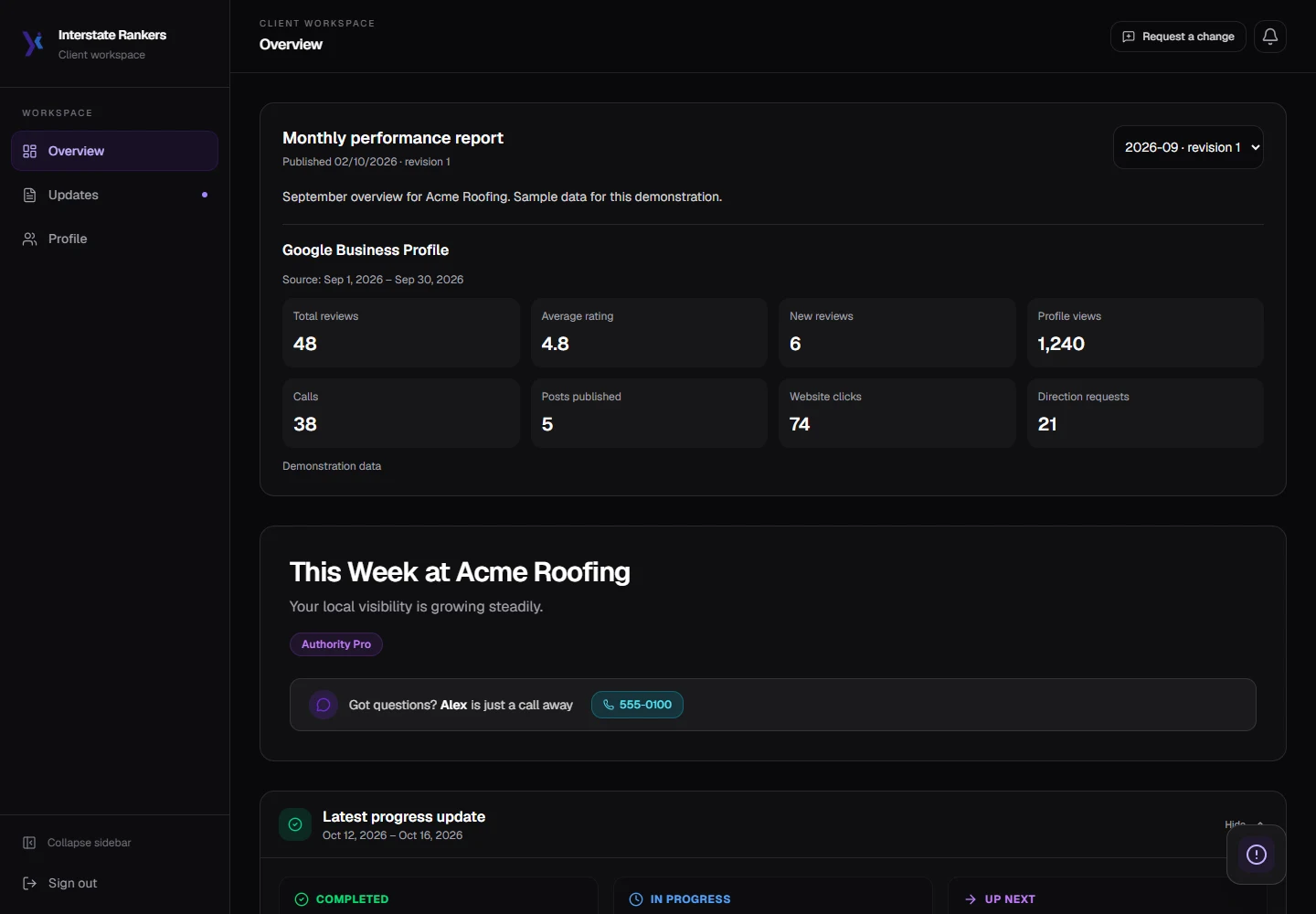
The agreed report identifies the reporting period, advertising spend, impressions, and clicks where available.
Service or location breakdowns can help explain allocation when the campaign structure and data support them.
Reporting distinguishes measured forms, attributed calls, and other configured actions.
Cost per tracked enquiry needs a clear counting method. Bookings, sales, and revenue require reliable business records rather than assumptions about every conversion.
ISR HQ connects reporting with work updates and next priorities.
Reviews explain meaningful changes, unresolved issues, and where client feedback or additional measurement is needed before drawing a stronger conclusion.
Getting started
Accurate business information and a responsive point of contact help us move forward. Where possible, grant account access by invitation instead of sharing personal passwords.
Tell us about anyone else editing the same accounts or website. We need clear responsibilities and coordinated changes so the work can be assessed properly. We work with established, legitimately operating businesses and can discuss readiness before an engagement begins.
Scope & pricing
Google Ads management is quoted according to your services, locations, campaign requirements, and advertising budget. Get a Free Proposal that separates management work, media spend, and any additional implementation costs.
We explain the fees, responsibilities, and applicable terms before you decide. Bring your current setup and your questions to the first conversation so we can recommend the right scope.
Questions answered
Practical answers about delivery, access, costs, and expectations.
They are separate. The management fee covers the agreed work, while media spend pays for advertising. The proposal identifies both and any additional page or tracking costs.
The recommendation depends on your services, locations, competition, goals, and capacity. Start with clear commercial priorities so the allocation has a purpose beyond generating more clicks.
We do not promise a fixed number of enquiries, customers, or a particular return. Scope, budget, tracking, and review criteria are established before launch.
Access, approvals, website readiness, tracking, verification, and platform review affect timing. The launch plan should identify those dependencies rather than assume the campaign can serve immediately.
Delivery first produces observable activity such as impressions and clicks. Evaluating enquiry quality and business value requires sufficient relevant contacts, reliable measurement, and feedback about what happened after contact.
Account access and an initial assessment establish the available history and work required. That review helps determine whether the next step is refinement, restructuring, or addressing a measurement problem.
Not automatically. We assess the existing destination against the advertised service and contact journey. A dedicated build is included only when specified, with its responsibilities and costs explained.
That depends on the agreed measurement setup. Attributed calls may require additional configuration or paid tools. Phone-link clicks and completed calls must be described separately in reporting.
An enquiry must match the service, location, and customer criteria agreed with your business. A recorded conversion alone does not establish qualification, a booking, or a sale.
Share the reason each contact was unsuitable. That information can guide available search-term reviews, exclusions, messaging, and destination changes, while helping distinguish targeting problems from handling or availability issues.
PPC management does not automatically include answering, sales follow-up, or booking appointments. Agree who handles new enquiries and discuss a separate support service if your team needs help.
Your proposal specifies the platforms and campaign types included. Additional platforms have their own targeting, creative, measurement, and management requirements and should be assessed separately.
Account access, ownership, campaign history, page assets, and separately licensed tools should be addressed in the service agreement. Review those details before setup so responsibilities are clear throughout the engagement.
Recurring services require 15 days notice to cancel. Advertising spend, subscriptions, and separately scoped page work should be reviewed alongside the arrangements in your service agreement.
Connected services
Develop useful service pages and organic search visibility alongside your paid advertising plan.
Plan landing pages or broader website changes around the enquiry journey.
Discuss separately scoped help handling incoming enquiries and arranging the next step.
Your next step
Tell us about your services, where you work, and what needs to improve. Our marketing team aims to respond within one to two working hours; a business audit normally follows within one to two working days.